Cost Guide
3 Best Golf Launch Monitors Under $1,000
As an Amazon Associate, this website earns from qualifying purchases.
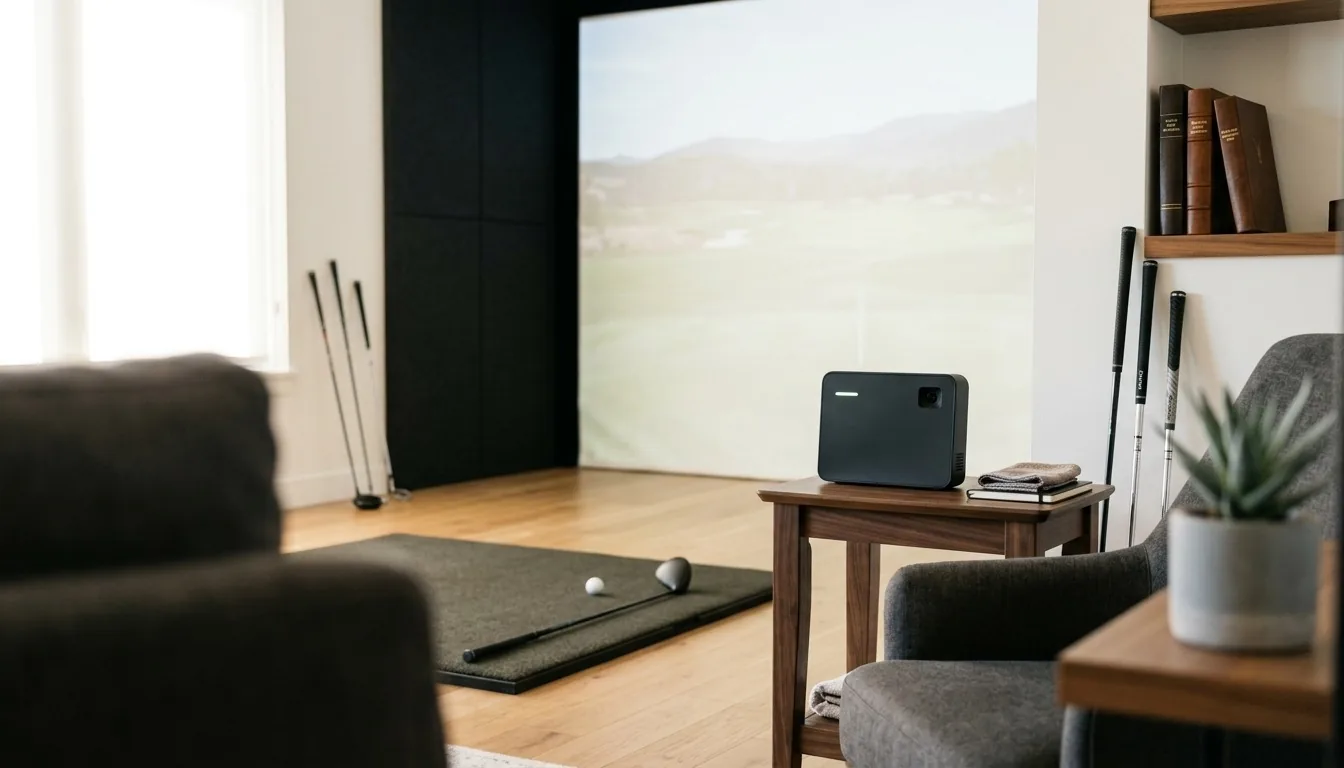
The Rapsodo MLM2PRO is the best launch monitor under $1,000 when one unit must work indoors and outdoors, the Garmin Approach R10 is the simpler value pick for a net-and-tablet setup, and the Swing Caddie SC4 is the easiest range companion because it has its own display.
This guide is part of Golf Simulator Budget Breakdown: Parts, Room Prep and Five-Year Costs.
Sections6
Our picks at a glance
| Product | Best fit | Check before buying | Latest price |
|---|---|---|---|
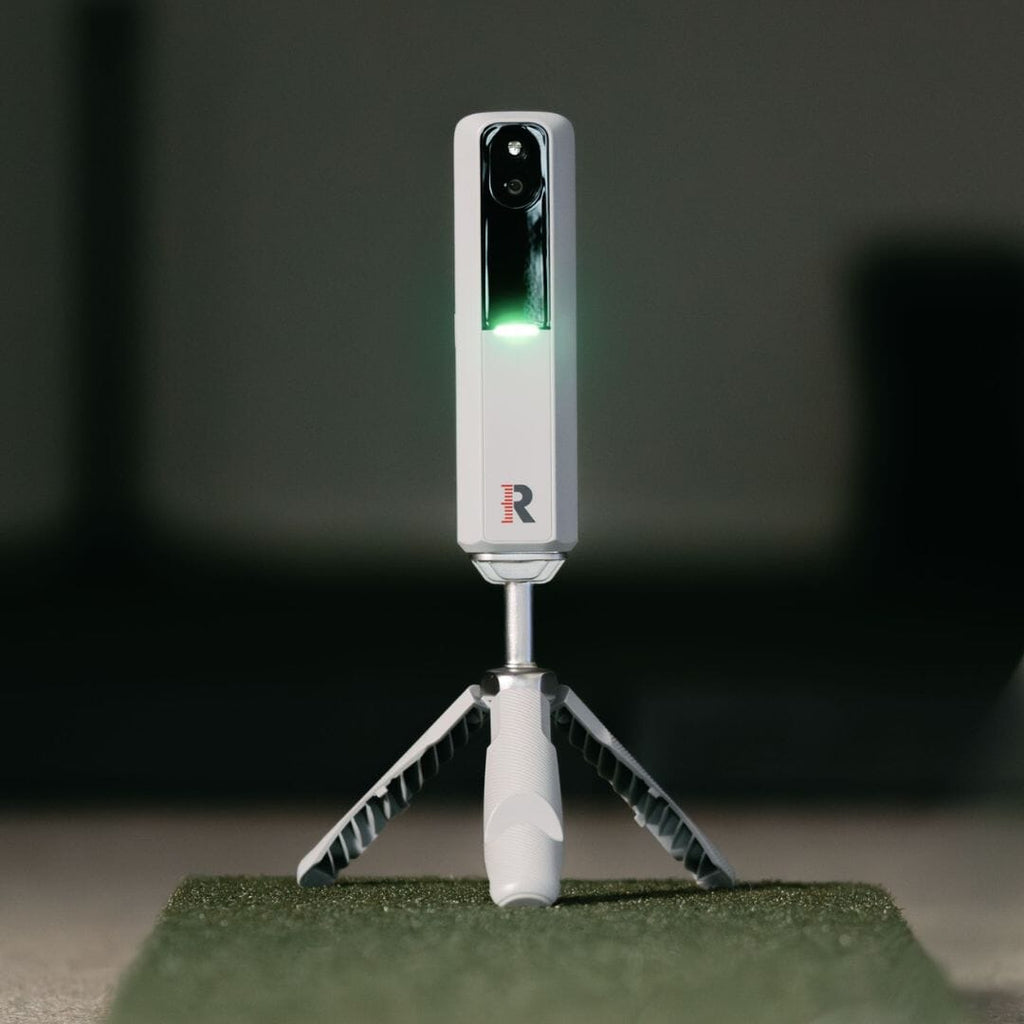 1. Rapsodo MLM2PRO 1. Rapsodo MLM2PRO | Best fitIndoors and outdoors | Check before buyingMatch the exact model to your room and software. | View Latest Price |
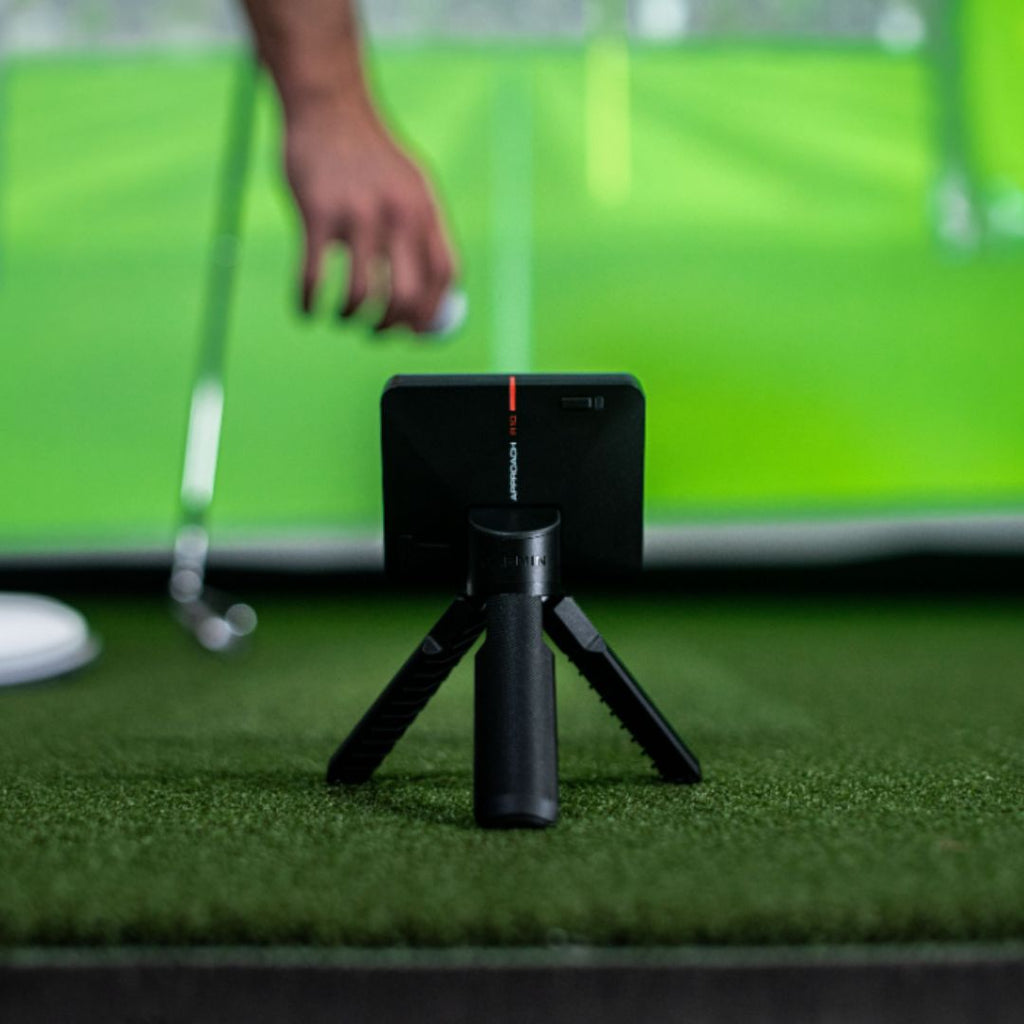 2. Garmin Approach R10 2. Garmin Approach R10 | Best fitA net bay | Check before buyingMatch the exact model to your room and software. | View Latest Price |
 3. Swing Caddie SC4 Launch Monitor 3. Swing Caddie SC4 Launch Monitor | Best fitStandalone sub-$1,000 monitor | Check before buyingConfirm supported software and room setup before ordering. | View Latest Price |
1. Best Overall: Rapsodo MLM2PRO
The MLM2PRO wins when the same box has to work in a garage during winter and at the range during summer. Rapsodo combines Doppler radar with two cameras, records the swing and impact, and supports indoor simulation as well as outdoor practice. Its official specification lists 15 metrics, including measured ball speed, launch angle, launch direction, spin rate, spin axis, club path and angle of attack.
The important qualification is in the word “measured.” Indoors, spin rate and spin axis require Rapsodo's marked RPT balls. Those balls give the impact camera a pattern it can read. With an ordinary ball, do not assume the spin numbers have the same status.
Room length is the second qualification. Rapsodo says the unit sits 6.5 to 8.5 feet behind the ball and calls for about 8 feet from the ball to the net indoors. That is more than 14 feet before allowing any safety margin. A short spare room can rule it out even when the hardware fits the budget.
The final cost is also larger than the box. Use the MLM2PRO product button above to check the included trial and renewal terms, then include the membership in your five-year budget. Features and software access depend on the plan you choose.
Choose it if: you want indoor and outdoor use, swing video matters, your room has the required depth, and you accept the marked-ball and membership model.
Skip it if: the room is short, you want a screen-free standalone display, or you do not want a recurring software decision.
2. Best Value: Garmin Approach R10
The Approach R10 is the cleanest starting point for a golfer building a net bay around a phone or tablet. It is compact, established, easy to carry to the range and capable of putting a simulated shot on a connected screen. That combination is why it remains the obvious baseline against which other sub-$1,000 units are judged.
Its limit is the same one shared by the rest of this price tier: radar needs ball flight. Indoors, the unit sits behind the player and reads a short piece of the shot before the net stops it. Alignment, level placement and exact spacing matter. A confident number on screen does not prove the room gave the sensor enough information.
Use the R10 product button above to check the exact model and included accessories. Confirm the phone or tablet you plan to use supports the current app before buying.
Choose it if: you want a portable first monitor, already own the display device, and care more about useful practice than measured club-delivery detail.
Skip it if: indoor spin is the deciding metric or the room cannot provide the spacing radar needs.
3. Best Without a Phone: Swing Caddie SC4
The SC4 has one practical advantage the other two do not: the hardware itself can display and speak the main shot numbers. At the range, that means no phone on the ground and no screen needed for a simple gapping session. The catalog lists carry and total distance, swing speed, ball speed, smash factor, launch angle, launch direction, apex and spin rate.
It can still connect to the free VoiceCaddie S app for saved sessions and video, and Voice Caddie lists E6 Connect compatibility for simulation. The manufacturer specifies placement about 5 feet behind the ball. For indoor use, its own setup guidance recommends 10 feet from ball to net or screen, so this is not a short-room escape route.
Use the SC4 product button above to confirm the included accessories and software compatibility before ordering.
Choose it if: most sessions happen at the range, you want instant numbers without handling a phone, and simulation is secondary.
Skip it if: measured indoor spin and a broad simulator ecosystem matter more than standalone convenience.
Measure the Room Before Comparing Features
Every pick above sits behind the ball. Add the monitor-to-ball distance, the ball-to-net distance, room for the screen or net to move safely, and enough space for the golfer's backswing. A claimed “15-foot room” can become a 13-foot room once the wall, frame and safety gap are counted.
Use the room-size guide for the full width, depth and ceiling checks. If the room is under about 14 feet deep, stop shopping from this list and reconsider the build. A camera unit beside the ball usually fits a shorter room, but that moves you into a higher hardware tier.
Also test both right- and left-handed placement if more than one person will use the bay. A radar unit behind the ball is convenient for mixed-handed play; a side-mounted camera can need moving or a wider hitting area.
Budget the First Year, Not Just the Box
A monitor under $1,000 does not produce a finished simulator under $1,000. A safe mat, net or impact screen, side protection, device, software and marked balls can move the first-year total well above the sensor price.
Before choosing, write down five lines:
- Hardware and tax.
- Required phone, tablet or computer.
- First-year membership or simulator software.
- Marked balls and replacement accessories.
- The net, mat and safety protection needed to use it.
The golf simulator budget breakdown carries those costs through a complete room, while the build cost calculator turns them into one total. Do not spend the whole allowance on the sensor and leave the hitting surface to whatever remains; the mat is the part your joints notice.
The Verdict
Buy the Rapsodo MLM2PRO when one sub-$1,000 unit must cover indoor simulation and outdoor practice and your room meets its depth requirements. Buy the Garmin Approach R10 when you want the straightforward net-and-tablet starting point. Buy the Swing Caddie SC4 when range convenience and a built-in display matter more than the richest simulator workflow.
The room can overrule all three. Measure first, include software in the first-year cost, and distinguish measured metrics from calculated ones. If the room passes, compare the current retailer listing with your shortlist. If it does not, use the full launch monitor guide to compare higher-budget alternatives without forcing a short room into a radar purchase.
Quick answers
What is the best golf launch monitor under $1,000?
The Rapsodo MLM2PRO is the strongest all-round choice when you want measured spin indoors, swing video and outdoor use from one unit. It needs marked RPT balls for measured spin and enough room behind the ball, so it is not automatically the best choice for a short room.
Can a launch monitor under $1,000 run a golf simulator?
Yes. The Rapsodo MLM2PRO, Garmin Approach R10 and Swing Caddie SC4 can all support simulated practice or course play with compatible software and devices. The app and subscription terms differ, so the hardware price is not the whole first-year budget.
How much room does a budget launch monitor need indoors?
Budget units are normally radar-based and sit behind the ball. Plan on roughly 14 to 18 feet of total room length once you include the monitor-to-ball gap and ball-to-screen or net gap. Always follow the maker's current placement instructions for the model you choose.
Do cheap launch monitors measure spin?
Some measure it under specific conditions and others estimate it. Rapsodo requires its marked RPT balls for measured spin indoors. Read the maker's distinction between measured and calculated metrics rather than treating every number on an app as a direct measurement.